" height="5.00155387474404px" id="T1L7vK7HI" transform="translate(4.712 7)" width="8.575800000000001px"/></svg>)
The question about support automation that every founder is asking right now
Article

Leon Jungfleisch
CEO & Co-Founder
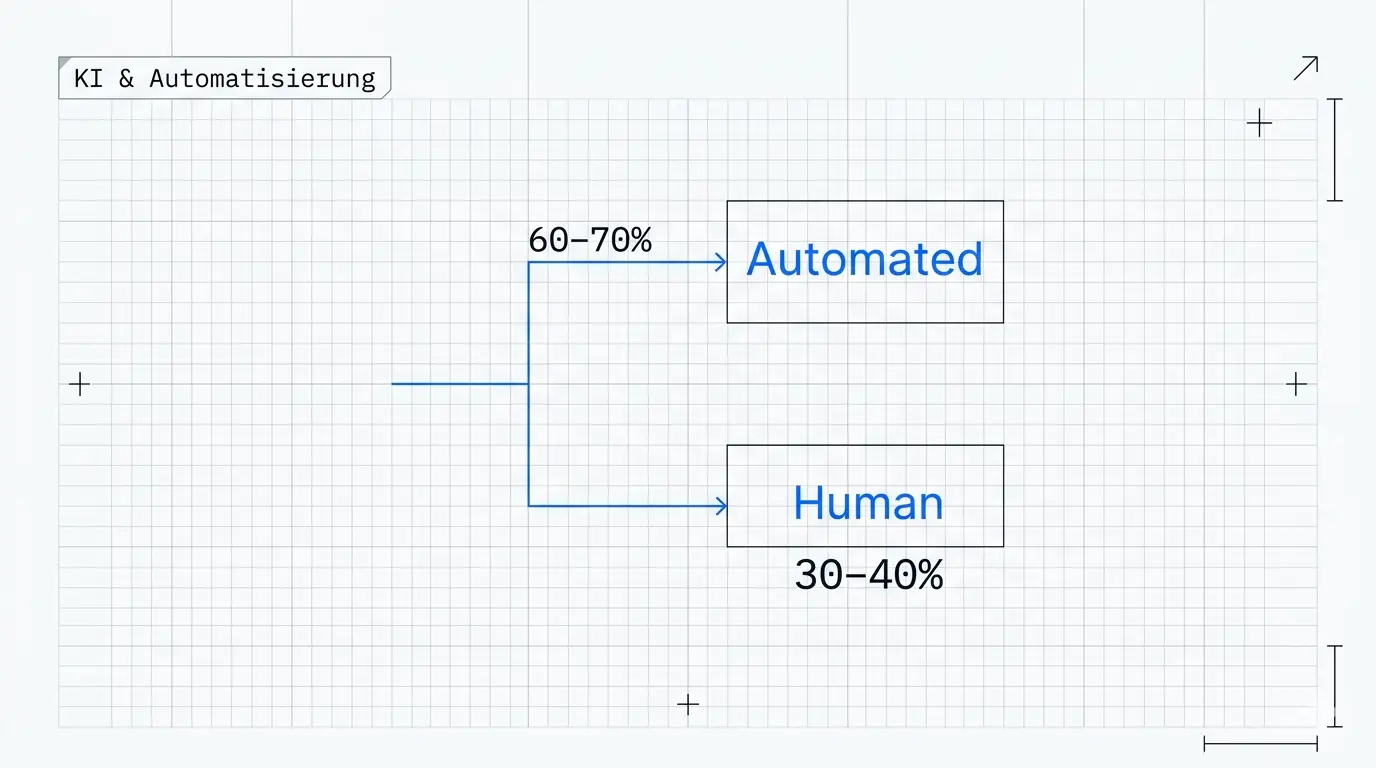
Table of Contents
Two weeks ago, a founder asked on Reddit whether support automation for a small business is really worthwhile. More than 70 comments came in. Most people agreed — but not in the way you’d expect from a software pitch.
The consensus was not "automate everything." It was "automate the right things."
Almost every founder who had actually tried it came to the same figure: somewhere between 60 and 70 per cent of incoming support volume was made up of the same 8 to 10 questions.
Order status
Return policy
Delivery times
Simple troubleshooting.
→ Questions for which the answer literally never changes.
This matches what we regularly see with e-commerce teams: around 60–70% of total support volume falls into just 5–10 question categories. Teams that automated these top questions reported a 40–70% reduction in their workload - sometimes several hours a day.
This is the case for automation. Not because it saves a few minutes, but because these tickets ate up the hours that were meant for customers with genuine problems. One commenter put it bluntly: „I finally had time to actually work on my product, instead of typing the same answers all day."
The other 30 to 40 per cent - the angry customer, the edge case, the person who simply needs to feel heard - still need a human. Every founder who tried to automate this category as well said the same thing: customers noticed, and trust suffered.
On the question „Do customers then feel less personally looked after?"
This kept coming up - and the honest answer from those who actually did it was: no, but only if you draw the line in the right place. Customers with simple questions got instant answers instead of hours of waiting. Customers with real problems got more attention because the founder was no longer buried in routine queries. Satisfaction rose in most cases.
What really damages a relationship is not automation - but automation that gets stuck in a loop and carries on regardless. A bot that cannot tell when it can no longer help is the real problem, not automation itself.
The practical takeaway
Before you look at any tool, do this:
Write down the 10 questions you answer most often, and your exact response to each. If that list makes up more than half of your weekly volume, automation has a clear ROI and a clear scope. If you mainly deal with unique, judgement-heavy situations, the effort probably is not worth it yet.
Start with one channel. Automate only the questions where your answer never changes. Make the path to a real human obvious and short. Measure response time and resolution rate after two weeks = that's the version that works.
vennie is built specifically for e-commerce teams that deal with this exact split - the repeatable layer is handled automatically, everything else is passed to a human who already has the full order context loaded.
If you want to save yourself the manual work: we built a free audit tool that analyses your volume for you. It shows you exactly which question categories cost your team the most time, and where automation has a clear ROI.
The most common mistake
The most useful insight from the thread wasn’t which tool to use. It was about timing.
Several founders warned against buying automation software before you’ve even documented your most common questions. If you don’t know what your repetitive volume actually looks like, you’ll end up fighting the tool instead of working with it.
The practical recommendation that kept coming up — and that has proven itself in practice:
Track every incoming question by category for two weeks before touching any tool.
Only automate the top 5–10 questions that make up more than 60% of your volume.
At the end of this process, you’ll know whether automation actually has an ROI or not. Most companies find that just two or three categories cover the majority of their volume. That’s your starting point.
One person summed it up perfectly: “Do the math first, then the tool.”
Regarding the question "Do customers then feel less personally looked after?"
This kept coming up again and again — and the honest answer from the people who had actually done it was: no, but only if you draw the line in the right place. Customers with simple questions got instant answers instead of waiting for hours. Customers with real problems got more attention because the founder was no longer buried in repetitive standard questions. Satisfaction increased in most cases.
What really damages a relationship isn’t automation — it’s automation that traps customers in a loop and keeps going anyway. A bot that doesn’t recognize when it can’t help anymore is the real problem, not automation itself.
The practical conclusion
Before you look at any tool, do this:
Write down the 10 questions you answer most often — and your exact response to each one. If that list makes up more than half of your weekly volume, automation has a clear ROI and a clear scope. If you mostly handle unique, judgment-heavy situations, the effort probably isn’t worth it yet.
Start with one channel. Only automate the questions where your answer never changes. Make the path to a real human obvious and short. Measure response time and resolution rate after two weeks = that’s the version that works.
vennie is built specifically for e-commerce teams dealing with exactly this split — the repeatable layer gets handled automatically, everything else gets routed to a human, with full order context already loaded.
If you want to skip the manual work: we built a free audit tool that analyzes your volume for you. It shows you exactly which question categories cost your team the most time, and where automation has a clear ROI.
See what your automated support could look like →